Current Location:
How Do You Select Automotive Weatherstrip for Different Vehicles?
2026-09-15How Do You Select Automotive Weatherstrip for Different Vehicles?
Selecting the right Automotive Weatherstrip is important for achieving reliable sealing, noise reduction, water resistance, and long-term durability. Because different vehicles have different body structures, door designs, window systems, and operating conditions, the same weatherstrip profile may not be suitable for every vehicle.
When selecting an automotive weatherstrip, key factors include the vehicle type, installation location, sealing requirements, material, cross-sectional profile, compression characteristics, environmental conditions, and expected service life.
1. Consider the Vehicle Type and Application
The first step is to identify the type of vehicle and the specific application. Passenger cars, commercial vehicles, SUVs, electric vehicles, and other vehicle types may require different weatherstrip designs.
For example, a door weatherstrip needs to accommodate repeated opening and closing while maintaining sufficient contact with the vehicle body. Research on automotive door weatherstrip seals shows that the seal design is closely related to compression behavior, contact pressure, door closing effort, and sealing performance.
The cross-sectional shape and dimensions should therefore be matched to the vehicle body structure and installation position rather than selected only by material type.
2. Select the Appropriate Automotive Weatherstrip Material
Material selection is another important consideration. EPDM rubber is widely used in automotive sealing applications because of its resistance to weathering, ozone, and outdoor environmental exposure.
EPDM is commonly used for automotive door, window, hood, and trunk sealing profiles. Its combination of elasticity and environmental resistance makes it suitable for applications exposed to changing temperatures, moisture, sunlight, and repeated deformation.
For applications where lightweight construction, recyclability, or specific friction and damping characteristics are important, thermoplastic vulcanizates (TPVs) can also be considered. Research on automotive door inner belt weatherstrips has investigated EPDM/PP-based TPV materials for improving compression set, damping behavior, friction, and noise performance.
3. Match the Weatherstrip Profile to the Installation Location
Different parts of a vehicle require different Automotive Weatherstrip profiles.
Common applications include:
Automotive Door Weatherstrip
Automotive Window Weatherstrip
Windshield Weatherstrip
Car Trunk Weatherstrip
Hood Weatherstrip
Sunroof Weatherstrip
Door Glass Weatherstrip
For example, a door weatherstrip installed around the door perimeter needs to maintain sealing contact when the door is closed, while a window weatherstrip must accommodate movement between the glass and the sealing lip.
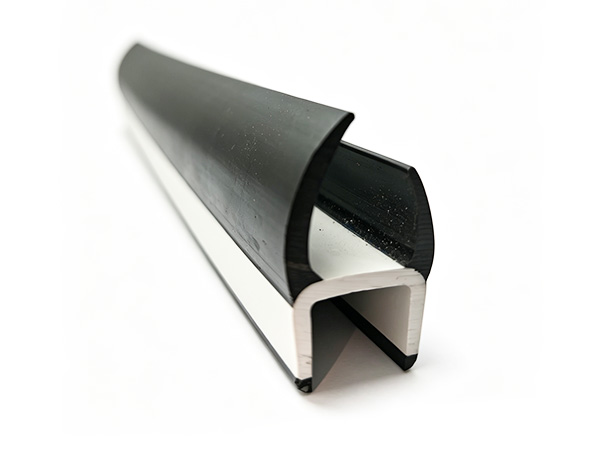
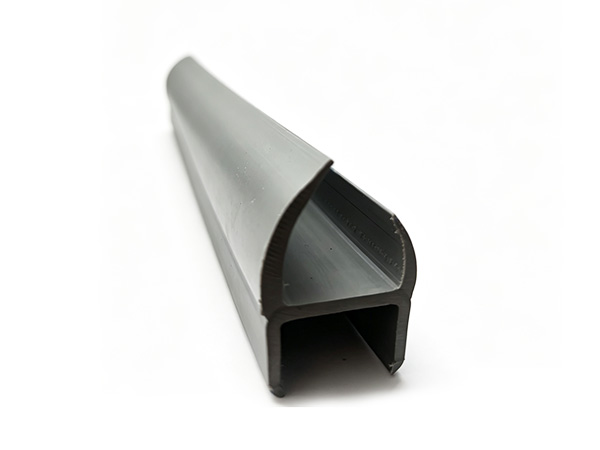
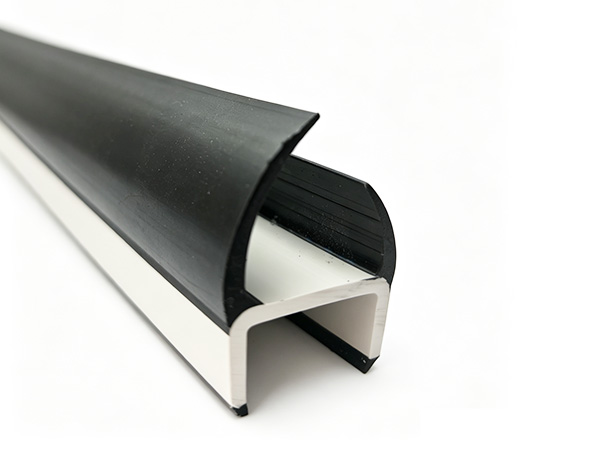
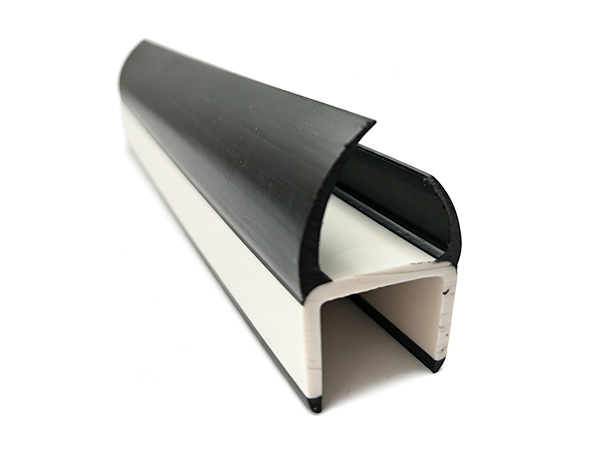
Automotive weatherstrip geometry can vary significantly according to the vehicle model and attachment location, so dimensional accuracy and profile design are important factors when selecting a suitable seal.
4. Evaluate Compression and Sealing Performance
A suitable weatherstrip should provide sufficient compression without creating excessive resistance during door or window operation.
Important performance factors include compression load, contact pressure, deformation, and sealing force. Automotive door weatherstrip research has used compression-load-deflection analysis and contact-pressure distribution to evaluate seal performance before prototype production.
If the weatherstrip is too soft, it may not provide sufficient sealing pressure. If it is too stiff, it may increase door closing effort or create unwanted friction and noise.
Therefore, the compression characteristics should be considered together with the vehicle's door gap, installation structure, and required sealing performance.
5. Consider Water, Dust, Air, and Noise Protection
One of the main functions of an Automotive Weatherstrip is to create a barrier between the vehicle interior and the external environment.
Depending on the application, the weatherstrip may need to help prevent:
Water leakage
Dust penetration
Air leakage
Wind noise
External environmental contaminants
Automotive door weatherstrip seals are used to isolate the passenger compartment from water and reduce wind noise, while also influencing the acoustic and vibration behavior of the vehicle door system.
For electric vehicles, noise control can become particularly important because the lower background noise level makes wind and sealing-related noise more noticeable. Recent research has therefore examined weatherstrip material and surface design for reducing wind noise and squeaking at the glass-weatherstrip interface.
6. Check Temperature and Weather Resistance
Vehicles are exposed to changing temperatures, sunlight, moisture, ozone, and other environmental conditions. The selected Automotive Rubber Seal should therefore maintain its flexibility and sealing function throughout the expected service environment.
EPDM is frequently used in automotive window and door sealing applications because of its weather and ozone resistance. Studies of EPDM automotive sealing compounds have also examined their thermal aging, mechanical properties, and resistance to environmental degradation.
For vehicles operating in particularly hot, cold, humid, or high-UV environments, material formulation and testing conditions should be considered during weatherstrip selection.
7. Consider Durability and Repeated Movement
Automotive weatherstrips are not static components. Door seals may be compressed and released repeatedly during vehicle operation, while window weatherstrips can experience repeated sliding contact.
Long-term durability is therefore an important selection criterion. Research on EPDM automotive weatherstrips has specifically evaluated fatigue life under repeated automobile door opening and closing cycles. The study also shows that weatherstrip geometry can influence fatigue performance while maintaining sealing characteristics.
For high-cycle applications, both the material and cross-sectional design should be evaluated for fatigue, compression set, wear, and deformation.
8. Confirm Dimensions and Custom Profile Requirements
For OEM and replacement applications, dimensional compatibility is essential. The weatherstrip should match the vehicle's installation channel, mounting structure, sealing gap, and surrounding components.
Custom Automotive Weatherstrip profiles may be developed according to:
Vehicle model
Installation location
Cross-sectional dimensions
Sealing gap
Compression requirements
Mounting method
Material requirements
Surface finish
Because automotive weatherstrip profiles can differ considerably between vehicle models and installation positions, providing accurate drawings, samples, or technical specifications can help determine the appropriate profile.
Conclusion
Choosing the right Automotive Weatherstrip requires more than selecting a rubber material. Vehicle type, installation location, profile geometry, material properties, compression behavior, environmental resistance, noise requirements, and long-term durability should all be considered.
For many automotive sealing applications, EPDM Automotive Weatherstrip is a common material choice because of its weather and ozone resistance. However, the final weatherstrip design should be matched to the specific vehicle structure and application requirements.
For OEM automotive sealing projects, providing the vehicle model, installation position, profile drawing, dimensions, material requirements, and expected operating conditions can help determine the appropriate Automotive Weatherstrip design.