Current Location:
How Is Automotive Weatherstrip Made?
2026-09-15How Is Automotive Weatherstrip Made?
Automotive Weatherstrip is typically manufactured through a combination of rubber compounding, profile extrusion, shaping, surface treatment, cutting, joining, and quality inspection. The exact production process depends on the material, profile structure, vehicle application, and performance requirements.
For many automotive sealing applications, EPDM rubber is commonly used because of its weather resistance, ozone resistance, elasticity, and durability. The manufacturing process must control both the material properties and the dimensional accuracy of the finished sealing profile.
1. Material Selection and Rubber Compounding
The manufacturing process begins with selecting the appropriate elastomer and additives.
For many Automotive Rubber Seals, EPDM is used as the primary rubber material. The compound can contain different additives to adjust properties such as hardness, elasticity, processing behavior, weather resistance, and aging performance.
Typical components of an EPDM weatherstrip compound may include:
EPDM polymer
Carbon black
Processing oils
Vulcanizing agents
Accelerators
Activators
Antioxidants
Other performance additives
The formulation is adjusted according to the required hardness, compression characteristics, temperature resistance, weather resistance, and application.
Studies of EPDM rubber used in automotive sealing applications have evaluated how formulation and aging conditions affect mechanical and sealing-related properties.
2. Mixing the Rubber Compound
After the materials are selected, the ingredients are mixed using industrial rubber mixing equipment.
The objective is to distribute the polymer, fillers, oils, curing agents, and other additives uniformly throughout the compound.
Consistent mixing is important because variations in the compound can affect the hardness, elasticity, compression set, and processing stability of the finished Automotive Weatherstrip.
The mixed material is then prepared for the extrusion process.
3. Extruding the Weatherstrip Profile
Most continuous Automotive Weatherstrip profiles are manufactured using rubber extrusion.
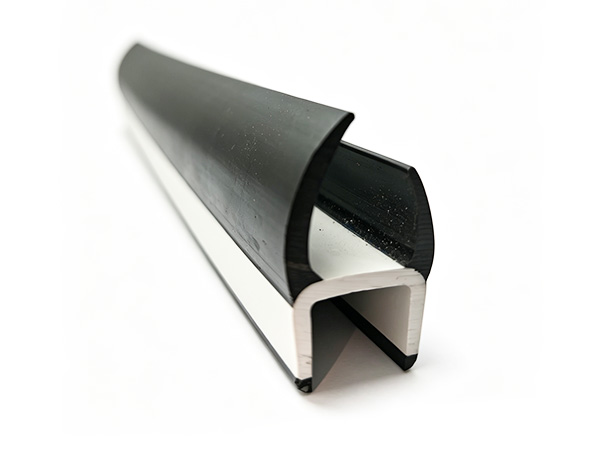
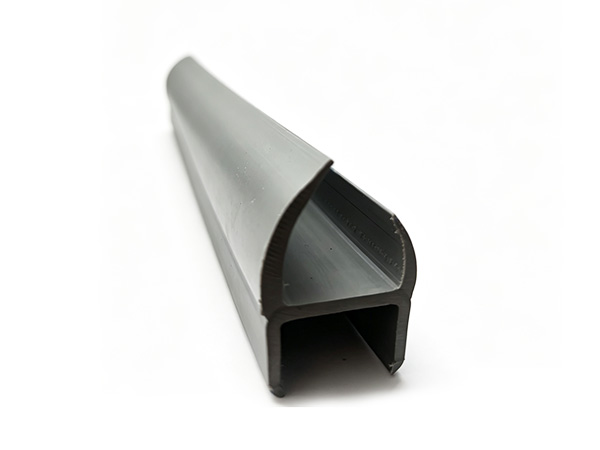
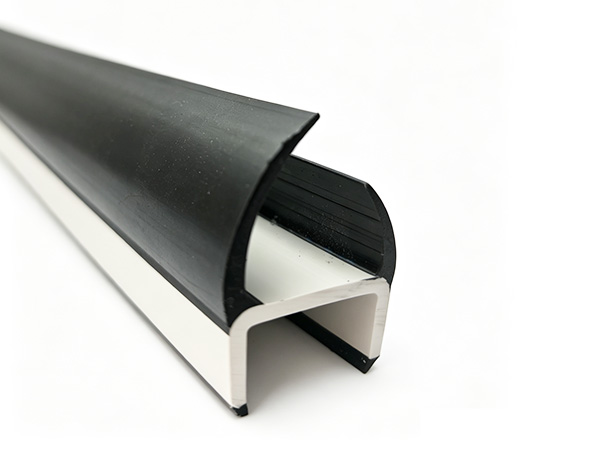
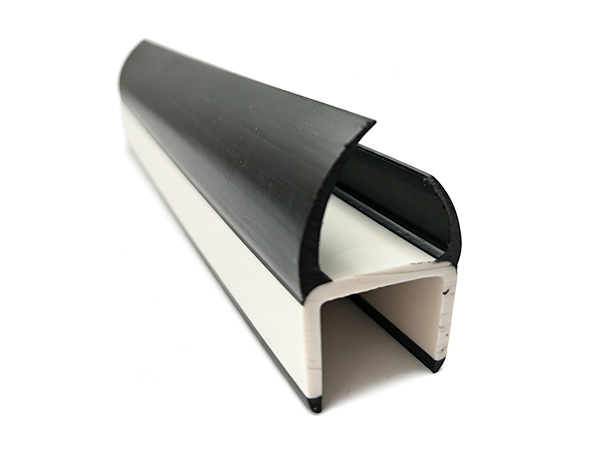
The prepared rubber compound is fed into an extruder and forced through a specially designed die. The die determines the cross-sectional shape of the weatherstrip.
Depending on the application, the profile may contain:
Sealing lips
Hollow chambers
Mounting channels
Flexible sections
Reinforced sections
Decorative surfaces
For example, a Car Door Weatherstrip may have a complex cross-sectional profile designed to provide controlled compression between the vehicle door and body.
Profile geometry is important because the shape affects compression behavior, contact pressure, sealing performance, and durability.
4. Vulcanization and Profile Shaping
Freshly extruded rubber is not yet at its final mechanical properties. It must undergo vulcanization, which creates crosslinks within the rubber structure.
Continuous automotive rubber profiles may pass through a controlled heating or curing system after extrusion. The temperature and processing conditions must be controlled to achieve consistent vulcanization.
The curing process affects important properties such as:
Elastic recovery
Hardness
Compression set
Tensile strength
Fatigue resistance
Research on EPDM automotive weatherstrips has investigated fatigue behavior under repeated door opening and closing cycles, demonstrating the importance of material and profile characteristics for long-term performance.
5. Cooling and Dimensional Stabilization
After vulcanization, the extruded profile is cooled and stabilized.
Dimensional control is particularly important for Automotive Door Weatherstrip because the finished profile must fit the vehicle's installation structure and sealing gap.
The production process may monitor:
Profile height
Profile width
Wall thickness
Lip position
Mounting dimensions
Cross-sectional shape
Accurate dimensional control helps ensure consistent installation and compression performance.
6. Surface Treatment
Some automotive weatherstrips require additional surface treatment.
Depending on the application, this can include:
Coating
Flocking
Surface lubrication
Low-friction treatment
Decorative surface treatment
Surface treatment can be especially important for weatherstrips that contact moving glass.
For example, automotive window and belt weatherstrips may require controlled friction characteristics to reduce wear, squeaking, and operating resistance.
Research into automotive door inner belt weatherstrips has examined the relationship between material, surface treatment, friction, and noise performance.
7. Cutting, Joining, and Forming
After continuous extrusion and surface treatment, the weatherstrip may be cut into specific lengths or formed according to the vehicle application.
Depending on the design, manufacturing processes may include:
Cutting
Splicing
Corner forming
Vulcanized joining
Adhesive bonding
Clip or fastener installation
For vehicle door applications, some weatherstrips are produced as continuous loops or formed assemblies to match the shape of the door frame.
The joining process needs to maintain the required sealing characteristics at connection points.
8. Inspection and Quality Control
Before shipment, Automotive Weatherstrip is inspected to verify that the material and profile meet the required specifications.
Common quality-control checks may include:
Dimensional Inspection
The cross-sectional dimensions and overall length are checked against the specified tolerances.
Hardness Testing
Rubber hardness is measured to confirm consistency between production batches.
Compression Testing
Compression behavior and compression set may be evaluated to determine whether the weatherstrip can maintain sealing pressure after deformation.
Tensile and Elongation Testing
These tests help evaluate the mechanical properties of the rubber compound.
Aging and Weather Resistance
Depending on the application, weatherstrips may be tested under heat, ozone, UV, humidity, or other environmental conditions.
Appearance Inspection
The finished profile is checked for surface defects, dimensional abnormalities, bubbles, cracks, contamination, and other visible issues.
What Equipment Is Used to Make Automotive Weatherstrip?
A typical automotive weatherstrip production line may include:
Rubber mixing equipment
Rubber extruder
Profile extrusion die
Vulcanization or curing system
Cooling equipment
Pulling equipment
Cutting equipment
Surface treatment equipment
Forming and joining equipment
Dimensional inspection tools
The exact equipment configuration depends on whether the product is a simple Automotive Rubber Strip, a complex Car Door Weatherstrip, a window seal, or another automotive sealing profile.
Can Automotive Weatherstrip Be Customized?
Yes. Automotive Weatherstrip can be manufactured according to different vehicle models and installation requirements.
Customization can involve:
Cross-sectional profile
Dimensions
Rubber compound
Hardness
Sealing lip design
Mounting channel
Surface finish
Cut length
Joining method
Application-specific performance requirements
For OEM applications, a technical drawing, existing sample, vehicle model, or profile specification can be used as the basis for developing the weatherstrip.
How Is EPDM Automotive Weatherstrip Different from Other Rubber Profiles?
The main difference is the combination of material properties and profile design.
EPDM Automotive Weatherstrip is commonly selected for applications requiring resistance to outdoor environmental exposure, ozone, moisture, and temperature changes.
However, the final performance of an automotive seal does not depend on the material alone. Rubber formulation, vulcanization conditions, cross-sectional geometry, compression, surface treatment, and installation design all contribute to the finished product's performance.
Conclusion
The manufacturing process for Automotive Weatherstrip generally includes material selection, rubber compounding, mixing, profile extrusion, vulcanization, cooling, surface treatment, cutting or forming, joining, and quality inspection.
For many automotive door and body sealing applications, EPDM Automotive Weatherstrip is widely used because of its combination of weather resistance, ozone resistance, elasticity, and durability.
However, producing a reliable Automotive Rubber Seal requires precise control of both material properties and profile geometry. The weatherstrip must ultimately match the vehicle's installation structure, sealing gap, compression requirements, environmental conditions, and expected service life.