Current Location:
What Factors Affect the Service Life of Automotive Weatherstrip?
2026-09-15What Factors Affect the Service Life of Automotive Weatherstrip?
The service life of Automotive Weatherstrip depends on a combination of material properties, environmental exposure, mechanical loading, profile design, installation conditions, and manufacturing quality. A well-designed weatherstrip must maintain its elasticity, sealing pressure, and structural integrity throughout repeated use and long-term exposure to the vehicle environment.
For many automotive sealing applications, EPDM is commonly used because of its weather, ozone, and heat resistance. However, even a high-quality EPDM Automotive Rubber Seal can gradually lose sealing performance if it is exposed to excessive heat, UV radiation, ozone, compression, or repeated mechanical deformation.
1. Material Quality and Rubber Formulation
The material formulation is one of the most important factors affecting the service life of an Automotive Weatherstrip.
EPDM rubber is widely used in automotive sealing applications because of its resistance to weathering, ozone, heat, and environmental exposure. However, the final performance depends not only on the base polymer but also on the curing system, fillers, plasticizers, stabilizers, and other additives.
Research on EPDM sealing materials shows that long-term exposure to heat, oxygen, mechanical stress, and other environmental factors can cause changes in the rubber's mechanical properties and sealing resilience.
Therefore, the quality and formulation of the rubber compound have a direct influence on long-term weatherstrip performance.
2. Temperature and Thermal Aging
Temperature is another major factor affecting Automotive Weatherstrip Service Life.
Automotive seals can experience repeated exposure to high and low temperatures. Long-term high-temperature exposure can accelerate chemical aging and affect properties such as hardness, elasticity, compression set, and recovery.
Research on EPDM seals has investigated aging at temperatures ranging from 75°C to 150°C and found that recovery behavior and compression set are important indicators of long-term sealing performance.
Higher operating temperatures generally accelerate degradation processes, so weatherstrips used near engines, exhaust systems, or other high-temperature areas may require particularly careful material selection.
3. UV Radiation and Sunlight
Outdoor automotive components are exposed to sunlight and ultraviolet radiation.
UV exposure can cause photo-oxidative degradation at the surface of rubber materials. Over time, this may contribute to changes in appearance, flexibility, and mechanical performance.
Research on EPDM compounds used for automotive window seals has examined degradation under controlled UV irradiation and found that photo-oxidation occurs primarily near the exposed surface.
Therefore, UV exposure is an important consideration when evaluating the service life of Automotive Weatherstrip, particularly for exposed door and window sealing profiles.
4. Ozone Exposure
Ozone can contribute to cracking and deterioration of rubber materials.
EPDM is commonly selected for automotive weatherstrips partly because of its strong ozone resistance. Nevertheless, long-term environmental exposure can still influence the condition of the rubber, depending on the formulation and operating environment.
Material selection, compounding, and surface protection can therefore influence the ability of an EPDM Automotive Weatherstrip to maintain its performance over time.
5. Repeated Compression and Compression Set
A weatherstrip is normally compressed when the door, window, hood, or trunk is closed.
Over time, repeated or continuous compression can cause compression set and stress relaxation. These effects can reduce the contact pressure between the seal and the mating surface.
Research on EPDM sealing materials shows that compression set and stress relaxation can gradually reduce contact stress and eventually affect sealing performance.
For this reason, the compression characteristics of a Car Door Weatherstrip should be matched to the actual sealing gap and installation structure.
6. Repeated Opening and Closing Cycles
Automotive door weatherstrips experience repeated deformation every time the door is opened and closed.
This cyclic deformation can create fatigue stresses within the rubber profile. If the local strain becomes excessive, cracks may eventually develop in vulnerable areas.
A study specifically examining EPDM automobile weatherstrips found that fatigue life is strongly related to repeated door opening and closing operations and to the geometry of the weatherstrip cross-section.
This means that service life depends not only on the rubber compound but also on how the profile deforms during operation.
7. Weatherstrip Profile Design
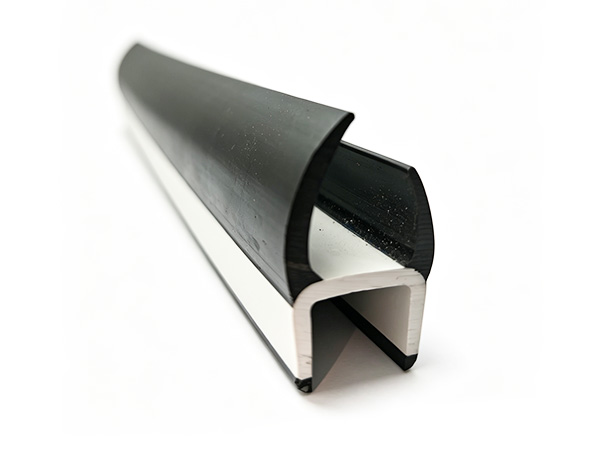
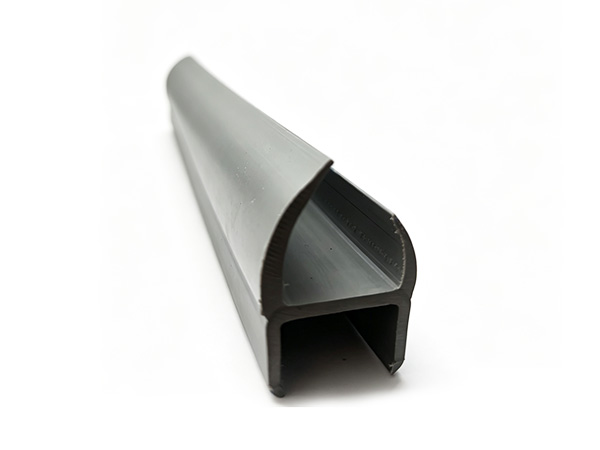
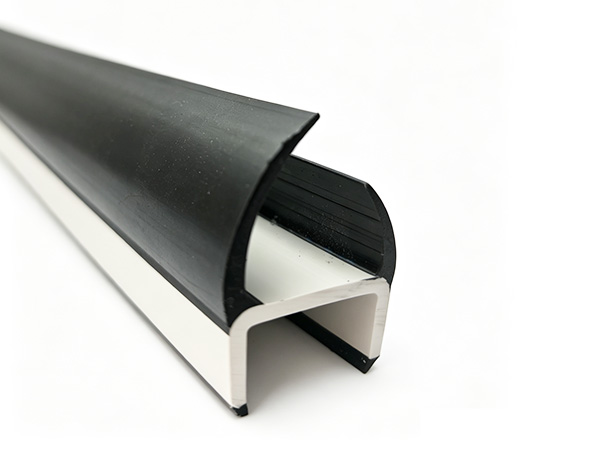
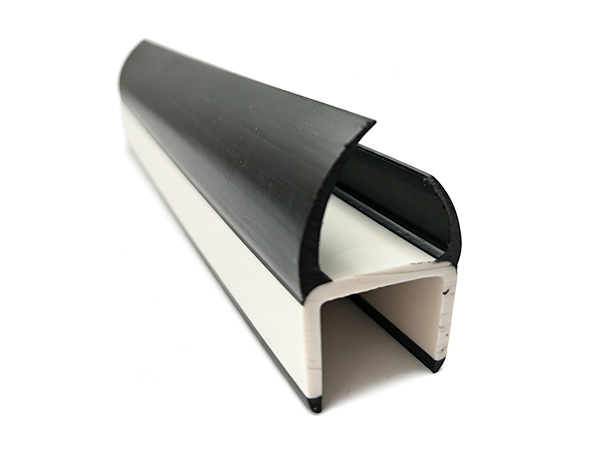
The cross-sectional design of an Automotive Weatherstrip has a significant effect on durability.
Important design parameters can include:
Profile thickness
Sealing lip geometry
Hollow chamber dimensions
Compression ratio
Radius transitions
Mounting structure
Reinforcement position
A poorly designed profile may concentrate strain in specific areas, increasing the risk of fatigue failure.
Research on EPDM automotive weatherstrips demonstrated that optimizing the cross-sectional topology could significantly improve predicted fatigue life while maintaining sealing performance.
Therefore, profile geometry should be considered together with material selection during weatherstrip development.
8. Installation and Compression Conditions
Even a high-quality Automotive Door Weatherstrip can have a shortened service life if it is incorrectly installed.
Excessive stretching, twisting, insufficient compression, or excessive compression can change the way the seal contacts the vehicle body.
Automotive door seal research shows that compression load-deflection behavior and contact pressure distribution are important factors in weatherstrip design and performance.
Correct installation helps maintain the intended compression and contact conditions throughout the service life of the seal.
9. Friction and Sliding Contact
Some automotive weatherstrips experience continuous or repeated sliding contact, especially around vehicle windows.
Friction can contribute to wear, surface damage, squeaking, and changes in sealing behavior.
For these applications, the material formulation and surface treatment should be selected according to the movement and contact conditions.
This is particularly important for Automotive Window Weatherstrip and glass-run sealing systems.
10. Water, Chemicals, and Environmental Contaminants
Automotive weatherstrips may be exposed to:
Water
Road salt
Dust
Cleaning agents
Oils
Fuels
Other automotive fluids
The compatibility between the sealing material and its surrounding environment can affect long-term durability.
The exact resistance required depends on the installation location. A door seal, engine-compartment seal, and trunk seal may experience very different environmental conditions.
11. Manufacturing Quality
Manufacturing consistency also affects the service life of an Automotive Rubber Seal.
Important production factors include:
Rubber compound consistency
Mixing quality
Extrusion accuracy
Vulcanization control
Profile dimensions
Surface quality
Splicing quality
Dimensional tolerances
Incorrect curing or inconsistent material properties can affect hardness, elasticity, compression set, and fatigue resistance.
Dimensional accuracy is particularly important because the weatherstrip must fit the vehicle structure and achieve the intended compression.
How Can the Service Life of Automotive Weatherstrip Be Extended?
Several factors can help improve the durability of Automotive Weatherstrip:
Select a suitable rubber material for the application.
Use a stable and properly formulated EPDM compound where appropriate.
Optimize the cross-sectional profile to reduce excessive local strain.
Control the compression ratio during installation.
Ensure accurate extrusion and vulcanization.
Consider UV, ozone, temperature, and chemical exposure.
Use appropriate surface treatments for sliding-contact applications.
Conduct aging, fatigue, compression, and environmental testing before production.
For OEM applications, service-life evaluation should consider the actual operating conditions rather than relying only on short-term material tests.
How Long Does Automotive Weatherstrip Last?
There is no universal service-life period for all Automotive Weatherstrip.
Actual service life depends on factors such as:
Material formulation
Vehicle design
Installation location
Temperature
UV exposure
Ozone exposure
Compression
Opening and closing frequency
Friction
Environmental contaminants
Manufacturing quality
Academic studies of elastomer seals show that lifetime predictions can vary significantly with temperature, compression conditions, material type, and the selected end-of-life criterion.
Therefore, a specific service-life claim should be based on the material specification, test conditions, vehicle application, and expected operating environment.
Conclusion
The service life of Automotive Weatherstrip is affected by much more than the rubber material itself. Temperature, UV radiation, ozone, compression set, repeated deformation, profile geometry, installation conditions, friction, environmental contaminants, and manufacturing quality can all influence long-term sealing performance.
For many automotive applications, EPDM Automotive Weatherstrip provides a strong combination of weather resistance, ozone resistance, elasticity, and durability. However, the profile must also be properly designed and matched to the vehicle's sealing requirements.
For OEM automotive weatherstrip development, evaluating both material durability and profile performance is important for achieving reliable long-term sealing.